When truth is better than fiction 

As an editor and avid reader, I love a good story, especially creative nonfiction. If you’re unfamiliar with that term, I mean a true tale that reads like fiction. But unlike traditional nonfiction, creative nonfiction contains many of the literary devices found in a great novel. You’ll not only find a compelling plot, but there will also be fleshed-out characters with personal details of their lives, descriptive and sometimes poetic prose, dialogue between characters, rich scene setting, and often suspense. Sometimes the writer plays a large and visible part in the story, other times they are an invisible observer.

Wooden tiles on a rustic background spelling the word 'creative'.
Photo by Markus Winkler at Pexels

Although writer David Madden used the term “creative nonfiction” in an article in the 1960s, Professor Lee Gutkind shone the spotlight on it a decade later when he created a course bearing that name at the University of Pittsburgh. He followed that up by starting the magazine Creative Nonfiction in 1991. The term was needed in the giant nonfiction genre that encompasses everything from academic textbooks and travelogues to cookbooks and biographies. Authors were still writing in a literary way, but there wasn’t a defined term to separate creative factual pieces that draw in and captivate the reader in a way that journalism usually doesn’t. In his 1997 book The Art of Creative Nonfiction, Gutkind makes this important distinction between creative nonfiction and traditional reportage: “balance is unnecessary and subjectivity is not only permitted but encouraged.”

When the writer and narrator are the same, their distinct voice and unique point of view are usually front and center in their story. It’s the intimate details they share about their life that adds to the book’s impact (Maya Angelou’s poignant I Know Why The Caged Bird Sings). True crimes, however, can be more objective when the writer is presenting the story in a factual yet still gripping and suspenseful way (Truman Capote’s In Cold Blood).
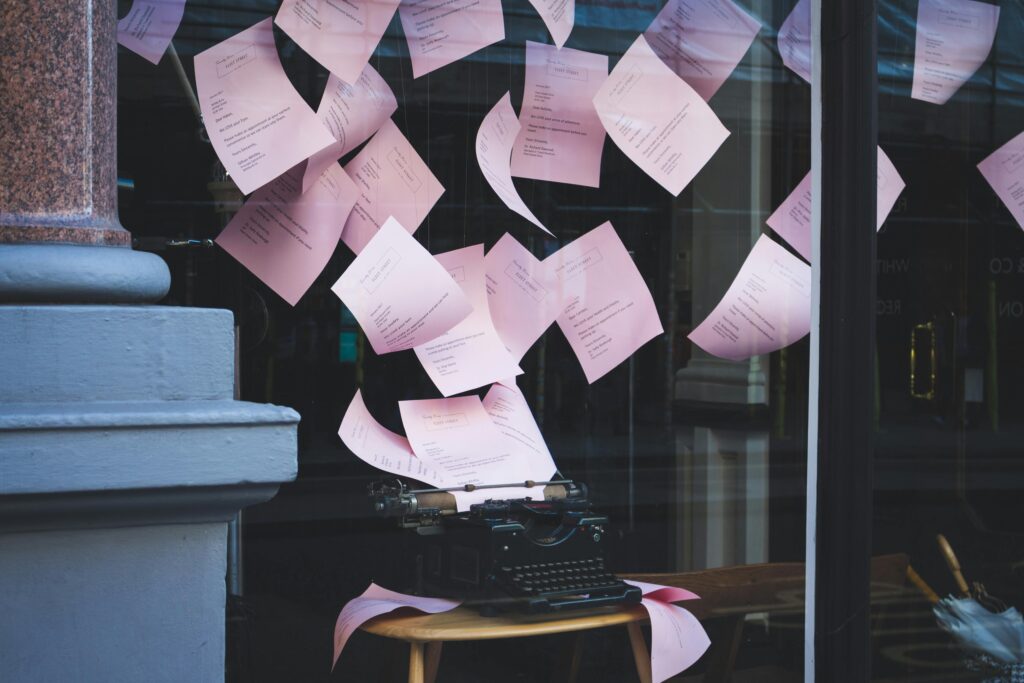
Artistic display of a vintage typewriter with pink papers floating in a window setting, indoors.
Photo by Dom J at Pexels

For all editors, a detailed style sheet is essential to maintain consistency and correctness throughout the manuscript. As with fiction editing, a creative nonfiction editor must track all characters (names, physical descriptions, and defining aspects such as age, accent, education, etc.), settings, structure of story (ensuring the flow and order make sense, even in flashbacks), while also researching that everything is factually correct. In fiction, the main character’s hair and eye color can be anything the author chooses, but in creative nonfiction, every detail that can be verified needs to be double-checked. With autobiographies and memoirs, the author may opt to change some names to protect others, but they will alert the reader of any changes and the reasons, while still staying true to the story. Citations and author notes are often included. Establishing trust and believability is essential in crafting a credible story, which is something all authors must grapple with, whether they are inventing worlds, sharing their personal story, or writing a historic fiction that blends real-life events with original characters.

Two of my favorite reads showcase creative nonfiction at its finest. In his 2003 book, The Devil in the White City, Erik Larson writes a colorful, suspenseful, and meticulously detailed account of the 1893 World’s Fair in Chicago and the serial killer who uses the fair to distract his victims. This one offers crossover appeal for both fiction and nonfiction lovers.

On the other end of the spectrum is Educated, the remarkable 2018 memoir by Cambridge-educated Tara Westover about growing up in a secluded and religiously strict family in the rural mountains of Idaho where school and social interaction were forbidden. She discovers books and secretly begins teaching herself enough to eventually be accepted to college. As with many other memoirs, she includes an acknowledgment that her childhood memories may differ from her siblings, but as Gutkind reminds us about this genre, subjectivity is encouraged.

I’m constantly inspired by the authenticity and honesty of so many authors, whether I’m approaching their work as an editor or a reader. The next time you’re after an engrossing story to read, why not go with something that rings true. By choosing a creative nonfiction book, you’ll likely find the best of both worlds.


Bridging medicine and law:
Inside the world of a medicolegal editor

If you’re editing a document that mentions ‘plant affection’ or an ‘easily destructible hedge trimmer’, it may be that you specialise in gardening books. Or, as in my case, medicolegal reports. When I came across those terms in a report, it took some lateral thinking to work out that they should have said ‘plantar flexion’ and ‘an easily distractible head tremor’.

So what is medicolegal editing and why would head tremors and foot movements end up sounding like gardening terms? (Hint: transcription software)

Photo by Andy Dean from Noun Project (CC BY-NC-ND 2.0)

When a doctor writes a report for a personal injury or medical negligence case, every word matters. That report could help determine the outcome of a claim – whether someone receives compensation after an accident, or whether a clinician’s actions are found to be negligent or reasonable. It might be read by solicitors, barristers, judges, insurers, or even by the claimant or defendant themselves. Each case has its own story and that story needs to be crystal clear.

I help expert witnesses make sure their reports are accurate, consistent and easy to follow – without ever changing their professional opinion, of course.

In addition to fixing the usual spelling, punctuation and grammar mistakes, I look out for the ambiguous phrasing, the typo in a drug name, the wrong address, the inconsistent spellings in names, the incorrect date that could raise questions later on. Or the left tibia fracture that becomes a right tibia fracture later on, the ‘now’ that should have said ‘not’, the use of the wrong anatomical term (e.g. perineal and peroneal are pronounced the same but relate to two very different parts of the body), or the 30 weekly units of alcohol that should have been 3, which completely changes how a claimant is perceived.

I ensure the timeline makes sense, and that the formatting, structure, and wording meet the requirements of the courts.

How did I get into this kind of editing?

I was approached in 2014 by a pain management expert looking for someone with some medical and anatomy/physiology background to edit his expert witness reports. He was happy with the result and passed my name on to a couple of other doctors, who were also happy, and 12 years later I’ve edited nearly 4,000 medicolegal reports for 36 different expert witnesses. My clients cover medical specialties as wide ranging as orthopaedics, neuropsychology, forensic psychiatry, pain medicine, dermatology, paediatrics, and occupational medicine, to name just some.

Why medicolegal editing matters

A well-edited report helps everyone involved in the case. For the expert witness, it safeguards credibility. For solicitors and barristers, it saves time and reduces the risk of misunderstandings. For the court, it ensures the medical evidence can be understood by readers who may not have a scientific background. And for the claimant, it means they are depicted accurately, objectively, and fairly.

Photo by Sam J @ Pexels

The reports I work on are varied. One day, I might be editing an orthopaedic surgeon’s opinion on a claimant who developed chronic pain after a car accident. The next, it could be a GP’s report exploring whether a delayed diagnosis led to complications. Then it could be a neuropsychology assessment of a child whose difficult birth caused oxygen starvation and brain injury. And I work with forensic psychiatrists whose cases sit right at the intersection of medicine and the criminal justice system. 

In that setting, clarity is absolutely vital. For example, I might edit a psychiatrist’s assessment of whether a defendant accused of theft was capable of forming criminal intent at the time of the offence. Or a report might explore the mental state of a woman charged with murdering her husband after enduring years of psychological abuse and gaslighting – analysing how his threats of violent consequences if she attempted to leave influenced her state of mind and her actions.

Each report involves complex clinical details, sensitive background information, and legal implications that can be life changing. My job is to make sure the expert’s reasoning is clear, the terminology precise, and the structure logical – so that everyone can follow it without needing a medical degree or a magnifying glass.

Sometimes, it’s the smallest edit that makes the biggest difference. I once came across a sentence where an expert wrote that a defendant ‘appeared indifferent to the offence’. The context suggested that maybe it meant emotionally detached due to the side effects of his medication, not unremorseful. But this hadn’t been clarified. A quick question to the expert to confirm my thought meant the defendant was presented accurately and avoided what could have been an awkward moment in court.

A medicolegal report has to do more than present medical facts – it needs to tell a coherent, credible story. When an expert’s reasoning is easy to follow, their authority comes through naturally. Their credibility relies on the clarity of their writing.

Walking the line between medicine, law and language

Working in this field means wearing three hats at once. I need to understand enough medicine to recognise when something doesn’t add up; enough law to know what the courts expect; and enough editorial sense to make it all sound clear and human.

Image by Thomas from Pixabay

The tone can vary dramatically from one specialty to another. A forensic psychiatrist’s report may require delicately phrased descriptions of mental state and behaviour, while a surgeon’s report might sound like a chapter from an anatomy textbook. I bring structure and clarity – and, occasionally, translate from medical Latin to plain English.

At its heart, this work is about helping professionals communicate clearly in high-stakes situations. However, these reports often deal with very distressing subjects describing tragic life stories and can make disturbing reading. It’s crucial that the humorous mistakes I mentioned at the start of this blog are weeded out (gardening pun intended), but they do give me some much-needed light relief.

And how do such entertaining errors find themselves in the reports I proofread? Quite simply, because many medical experts dictate their reports using transcription software. And despite advances in technology, sometimes the results are less than accurate. It took me a while to realise a ‘baloney amputation’ was a below-knee amputation and that an ‘orphan optimist’ is actually an orthoptist. And when ‘Tim Thomas became unbearable’ in one report, context fortunately told me it was an extreme case of tinnitus rather than an insufferable little boy!

Whether you’re an expert witness looking for an editor, or an editor wanting to know more about medicolegal editing, please do get in touch with us at info@editingglobally.com

La rentrée: Refreshed and recharged

The French language has a wonderful word for the time of year when school starts, extracurricular activities ramp up, and many of us find excuses to visit our favourite stationery shop: la rentrée.

Re-entering, not returning, not back to. The potential of the future. The potential to change and to have changed. The potential to develop and to learn new things. To approach things, both professional and personal, in a different way. To see the future in a different way.

Photo of an open blank notebook lying flat on a wooden surface, with a pencil on the left and a plant on the right.

For many of us, September and October feel more like the start of a new year than does January. Some of us even prefer to start our planners in the fall, to review our professional lives (personal, too, but let’s just stick with the professional here), and plan for going forward. It’s not just returning to our work and businesses, but re-entering our professional lives, hopefully rejuvenated from some time off and with plans for and ideas about our work, our tools of our trade, our learning (our continuing professional development), and our communities. In effect, expanding our professional horizons. Not just looking at the same old horizons.

Some folks like to do a business micro retreat at this time of year and assess their way forward. Maybe some people will decide to add editing fiction to their services and will want to read lots of craft books and take at least one course. Others may decide to drop developmental editing from their services. Some of us will be looking at ramping up our hours, now that we’re free from some other commitments (e.g., caring commitments), others will be looking at cutting down on their hours, either with retirement on the horizon or moving into teaching or training, or even just because. Others may be making the jump from freelance editing to in-house editing.

Some people may even plan to get a four-footed editorial assistant to keep them company and, if that assistant is a puppy, to get them out of the house, and in that case, take it from me, uninterrupted work for a few months is unlikely.

The re-entering mentality enables us to think big, to think laterally, not just think of going back to the same old work and same old routines and same old ways of thinking.

How’s your version of la rentrée going a few weeks in, when the temperatures are dropping and the leaves are turning lovely colours in the northern hemisphere, and the temperatures are rising and the outdoors are starting to turn green in the southern hemisphere?

My Editing Globally colleagues and I expanded and relaunched our international editorial collective, thereby increasing our reach, our expertise, our experience, and the knowledge that comes from being a team. And increasing the fun while we are at it.

This blog post is based on a post previously published on the Editors Canada website on September 18, 2025.

Photo by Kelly Sikkema on Unsplash

What is a collective?

It’s a good question, and there’s no really short answer.

The Oxford English Dictionary defines it as “a cooperative enterprise.”

It’s a group of entities, in this case professional editors, who share a common interest—providing professional editorial services—and who work together to achieve a common objective—providing inclusive, seamless, and thorough editorial services to clients around the world. 

In the case of the Editing Globally collective, we also assist and support each other in our own businesses, offering advice and skills when asked, and when confidentiality permits.

We are all independent editors with our own businesses who join forces, pooling our expertise and scheduling ability, including across time zones, to provide the services clients need and expect, be the project large or small, very urgent or ongoing.

Clients can hire us as a group for large projects. They can also hire one or two of us for smaller projects. Either way, clients receive the benefit of all of us being able to consult the others if needed.

Because of the various time zones we are in, and because of our individual working patterns, we can collectively provide a 24/7 service. 

Because of our different lived experiences, the different countries we live in and/or have lived in, we are committed to inclusivity and compassionate and sensitive relationships with our clients, wherever they are and whoever they are.

All of us, together as a group, and individually, polish your words, elevate your ideas, and respect your voice. No matter the project, no matter the subject matter, the words and the message are yours.

Another way of defining the Editing Globally collective is that we’re a group of professional editing friends, who like and respect each other and each other’s work and skills, and who combined forces to provide the best for clients. We also have some fun while doing it!